Uncategorized

How to Mold a Boil-and-Bite Mouthpiece

How to Mold a Boil-and-Bite Mouthpiece

Molding your mouthguard correctly is essential for comfort, fit, and protection. Follow these steps to get the best results.

What You’ll Need

  • A boil-and-bite mouthpiece
  • A pot of water
  • A bowl of cold water
  • A mirror

Step-by-Step Instructions

  1. Boil Water
    Bring a pot of water to a rolling boil, then remove it from heat.
  2. Soften the Mouthpiece
    Place the mouthguard in the hot water for 30–60 seconds (check the manufacturer’s instructions).
  3. Remove Carefully
    Use tongs or a spoon to remove it. Let it cool for 3–5 seconds so it’s not too hot for your mouth.
  4. Fit to Your Teeth
    Put it in your mouth. Bite down gently but firmly. Use your fingers to press it against your teeth and gums. Suck in and use your tongue to press it to the roof of your mouth.
  5. Hold and Set
    Keep pressure on the mouthguard for 30–60 seconds.
  6. Cool the Mouthpiece
    Remove it and place it in cold water for 1–2 minutes to lock in the shape.

Check the Fit

  • It should feel snug and not fall out when you open your mouth.
  • You should be able to breathe and talk comfortably.

If the fit isn’t right, you can reheat and remold the mouthpiece.

Care Tips

  • Rinse after every use.
  • Let it air dry before storing.
  • Keep it in a ventilated case.
read more →

8 Things You Need to Know Before Your First Jiu-Jitsu Class.

8 Things You Need to Know Before Your First Jiu-Jitsu Class.

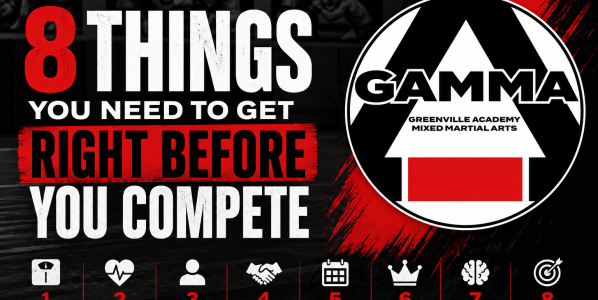
Walking into your first Brazilian Jiu-Jitsu (BJJ) class can feel intimidating. New environment, new people, strange terminology, and lots of grappling—it’s normal to feel nervous. The good news? Everyone on the mat started exactly where you are now. Here are eight important things to know before stepping onto the mat for your first Jiu-Jitsu class.


1. You Don’t Need to Be in Shape to Start
One of the biggest myths about Jiu-Jitsu is that you must already be fit. Not true. Jiu-Jitsu gets you in shape as you train. Whether you’re athletic or completely out of condition, the art is designed to meet you where you are. Pace yourself, breathe, and trust the process.


2. Leave Your Ego at the Door
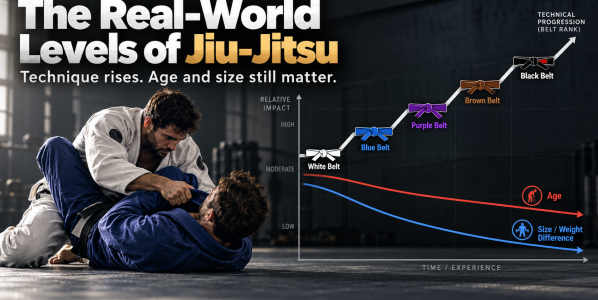
In Jiu-Jitsu, size, strength, and age matter far less than technique. You will likely be controlled or submitted by someone smaller or less intimidating than you—and that’s a good thing. Humility is part of the learning process. Every tap is a lesson, not a loss.


3. Tapping Is Normal (and Encouraged)
Tapping means you acknowledge a submission before injury occurs. It’s not quitting—it’s training smart. Everyone taps, including black belts. Tap early, tap often, and you’ll be able to train longer and safer.


4. Hygiene Matters More Than You Think
Clean gear and personal hygiene are critical in Jiu-Jitsu. Trim your nails, wear clean clothes, and shower after training. Grappling is close contact, and good hygiene shows respect for your training partners and helps prevent skin infections.


5. You Won’t Remember Everything—and That’s Okay
Your first class may feel overwhelming. Positions, movements, and terminology can blur together. That’s normal. Focus on learning one small detail at a time. Consistency matters more than memory. With repetition, everything starts to click.
6. Strength Is Helpful, Technique Is King
Beginners often try to muscle through techniques. Jiu-Jitsu rewards efficiency, leverage, and timing—not brute force. Relax, breathe, and focus on proper mechanics. As your technique improves, you’ll find you need less strength, not more.


7. Respect the Culture and the Mat
Jiu-Jitsu has deep roots and traditions. Bowing or lining up, listening when the instructor speaks, and treating teammates with respect are all part of the culture. You don’t need to know everything on day one—just be respectful and willing to learn.


8. Everyone Wants You to Succeed
This might be the most important thing to know. Your teammates and instructors want you to improve. Jiu-Jitsu schools are communities. Ask questions, accept guidance, and don’t be afraid to make mistakes. The mat is a place of growth, not judgment.


Final Thought
Your first Jiu-Jitsu class isn’t about being perfect—it’s about showing up. If you walk in with an open mind, patience, and humility, you’re already winning. Stick with it, and you’ll discover that Jiu-Jitsu isn’t just a martial art—it’s a lifelong journey of personal growth.
See you on the mat. 屢

read more →

8 Things You Need to Know Before Your First Muay Thai Kickboxing Lesson.

8 Things You Need to Know Before Your First Muay Thai Kickboxing Lesson.

8 Things You Need to Know Before Your First Muay Thai Kickboxing Lesson

Starting Muay Thai Kickboxing is an exciting step. Known as “The Art of Eight Limbs,” Muay Thai uses punches, kicks, elbows, and knees to build strength, confidence, and real-world striking skills. Whether your goal is fitness, self-defense, or competition, knowing what to expect before your first class will help you feel prepared and confident.

Here are 8 important things you should know before your first Muay Thai kickboxing lesson.

1. You Don’t Need to Be in Shape to Start

One of the biggest misconceptions about Muay Thai is that you need to already be fit. You don’t. Muay Thai gets you in shape—you don’t need to arrive that way.

Your first class will challenge you, but instructors expect beginners to pace themselves. Everyone starts somewhere, and consistent training matters far more than current fitness levels.

2. Expect a Structured Warm-Up

Muay Thai classes usually begin with a proper warm-up that may include:

  • Jump rope
  • Light shadowboxing
  • Dynamic stretching
  • Basic conditioning

This isn’t punishment—it’s preparation. Warming up helps prevent injury and gets your body ready for striking, footwork, and movement.

3. Technique Matters More Than Power

Beginners often think Muay Thai is about hitting as hard as possible. In reality, proper technique comes first.

You’ll focus on:

  • Stance and balance
  • Basic punches and kicks
  • Guard position
  • Proper hip rotation

Power will come naturally over time. Learning correct technique early prevents bad habits and injuries.

4. You Don’t Need Expensive Gear on Day One

Most gyms don’t expect beginners to show up fully geared. Typically, you’ll need:

  • Comfortable athletic clothing
  • Water bottle
  • Hand wraps (if you have them)

Many academies provide or loan gloves for trial classes. If you decide to continue training, your coach can help you choose the right gloves and protective gear.

5. You Will Be Corrected—and That’s a Good Thing

Coaches will give feedback, corrections, and demonstrations. This is part of learning Muay Thai properly.

Corrections aren’t criticism—they’re guidance. Everyone from beginners to professionals receives them. Listening and applying feedback is how you improve safely and efficiently.

6. Conditioning Is Part of the Art

Muay Thai training includes conditioning for:

  • Shins
  • Core
  • Cardio endurance

Your legs and arms may feel sore after your first few classes, especially if you’ve never kicked pads or bags before. This is normal and temporary. Your body adapts quickly with consistent training.

7. Respect and Discipline Are Core Values

Muay Thai isn’t just physical—it’s deeply rooted in respect, tradition, and discipline.

You’ll notice:

  • Respect toward instructors and training partners
  • A focus on control and safety
  • Structured class etiquette

This respectful environment makes Muay Thai training welcoming and supportive for beginners of all ages.

8. Everyone in the Room Was Once a Beginner

It’s normal to feel nervous before your first class. Just remember—everyone started exactly where you are now.

No one expects perfection. The goal of your first lesson is simple:

  • Learn something new
  • Move your body
  • Have a positive experience

Show up with an open mind, listen to your coach, and enjoy the process.

Final Thoughts

Your first Muay Thai Kickboxing lesson is the beginning of a journey—not a test. You don’t need to be fast, strong, or experienced. You just need to show up.

With the right mindset and a willingness to learn, Muay Thai can help you build confidence, discipline, and lifelong fitness—one class at a time.

If you’ve been thinking about trying Muay Thai, there’s no better time than now. 🥊🔥

read more →

8 Things You Need to Know Before Your Child’s First Jiu-Jitsu Lesson.

8 Things You Need to Know Before Your Child’s First Jiu-Jitsu Lesson.

8 Things You Need to Know Before Your Child’s First Jiu-Jitsu Lesson

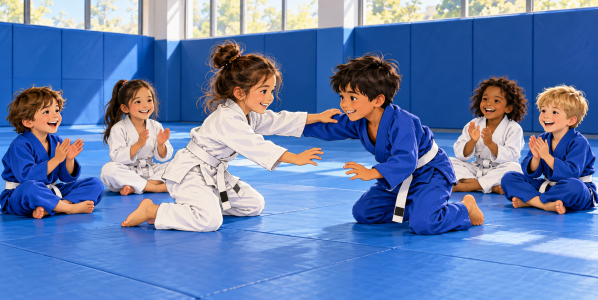
Starting Brazilian Jiu-Jitsu (BJJ) can be an exciting step for a child—and for parents, it often comes with questions and a few nerves.
Jiu-Jitsu is more than a martial art; it teaches discipline, confidence, respect, and problem-solving in a safe and structured environment.

Before your child steps onto the mats for their first class, here are 8 important things every parent should know.


1. Your Child Does Not Need to Be Athletic

One of the biggest misconceptions about Jiu-Jitsu is that kids need to be strong, fast, or already involved in sports. They don’t.

Jiu-Jitsu focuses on leverage, balance, and technique rather than size or strength. Many children who struggle in traditional team sports thrive
because Jiu-Jitsu rewards focus, listening, and persistence.


2. Safety Is the Top Priority

Safety is always the number one concern in kids’ Jiu-Jitsu classes. Instruction is age-appropriate and supervised at all times.

  • Certified instructors
  • Controlled training environments
  • Emphasis on tapping and communication

Children learn how to fall safely, control their movements, and respect training partners.


3. Jiu-Jitsu Builds Confidence, Not Aggression

Many parents worry martial arts will make their child aggressive. In reality, Jiu-Jitsu does the opposite.

Children gain confidence through skill development, which often leads to better emotional control, patience, and respect for others.


4. Discipline and Respect Are Part of Every Class

Jiu-Jitsu classes are structured and focused. From the beginning, children learn to:

  • Listen when instructors speak
  • Follow rules and routines
  • Show respect to teammates and coaches

These habits frequently carry over into school and home life.


5. Your Child Will Be Challenged (And That’s a Good Thing)

Jiu-Jitsu is intentionally challenging. Children will struggle, make mistakes, and learn how to stay calm under pressure.

This builds resilience, problem-solving skills, and confidence in overcoming obstacles.


6. Progress Is Individual, Not Instant

Every child progresses at their own pace. Promotions are based on effort, attitude, and consistency—not winning.

Encouraging patience and celebrating small improvements helps children stay motivated.


7. What to Wear and Bring

For a first class, keep things simple:

  • A clean gi or athletic clothing
  • No shoes on the mat
  • Trimmed fingernails and toenails
  • A water bottle

Avoid jewelry, zippers, or hard objects.


8. Parents Play an Important Role

Your support matters. Encourage effort, allow your child to learn independently, and be patient.

Some children love Jiu-Jitsu immediately, while others take time to adjust. Consistency and positivity make all the difference.


Final Thoughts

Jiu-Jitsu offers children far more than self-defense. It builds confidence, discipline, and mental toughness in a safe and supportive environment.

That first class is the beginning of a journey—one that helps children face challenges, respect others, and believe in themselves.

read more →

The Enduring Bond: A Legacy of Love and Loyalty

The Enduring Bond: A Legacy of Love and Loyalty

Some relationships are more than instructional — they are formative.
The bond between a teacher and a student, especially in disciplines like
martial arts, often begins with training the body but ends up shaping
the soul. Over time, what starts as guidance in technique becomes a
shared journey of character, discipline, and trust.

In the fullness of life, that student may one day become the protector
of the very person who once trained them. This reversal is not weakness;
it is the highest form of respect and gratitude. True mentorship does not
end when the lessons stop — it lives on in how we choose to love.

At first, the student learns how to love rightly before facing the
battles of life. Later, that same love becomes something worth defending
at all costs. This isn’t sentimental affection — it is a fierce,
committed loyalty rooted in gratitude.

A mentor does more than teach skills; they shape values. Those values
become the compass by which the student lives, decides, and protects
what matters most.

These ideas of honor, loyalty, and selfless love are echoed strongly in
Christian teaching. Scripture consistently calls us to respect those who
have gone before us and to care for them with dignity. Honoring our
mentors and elders is not optional — it is a reflection of our reverence
for God Himself.

“You shall stand up before the gray head and honor the face of an old man,
and you shall fear your God: I am the Lord.” — Leviticus 19:32 (ESV)

This verse reminds us that showing respect to those who have lived
longer and taught us deeply is not merely cultural courtesy — it is
a spiritual responsibility. When a student later becomes the protector
of a teacher, it is not role reversal; it is role fulfillment.

The Bible also points to a deeper kind of love — one that is willing to
sacrifice. True love is not passive. It stands, protects, and gives. It
is the kind of love that puts another’s well-being ahead of one’s own
comfort.

“Greater love has no one than this, that someone lay down his life for his
friends.” — John 15:13 (ESV)

This does not always mean physical battle, but it always means spiritual,
emotional, and moral courage. It means standing up for those who once
stood up for us. It means guarding their dignity, their safety, and
their legacy.

In the end, the story of a student becoming a guardian to their teacher
is more than touching — it is instructive. It shows us that mentorship
is a lifelong covenant, not a temporary role.

That is the legacy of a bond that truly endures — a love that is both
tender and fierce, rooted in respect, and strengthened by faith.

read more →

Gracie Jiu-Jitsu Seminar with Master Luiz Palhares

Gracie Jiu-Jitsu Seminar with Master Luiz Palhares

Join us for a special Gracie Jiu-Jitsu Seminar led by Master Luiz Palhares on Thursday, February 5th.


Schedule & Pricing
5:00 PM – Children’s Seminar | $20
6:00 PM – Adult Seminar | $60


Dress Code


Please wear a white gi if possible.
This is a great opportunity to train, learn, and gain insight from a true master in the Gracie Jiu-Jitsu lineage. All levels welcome. Don’t miss it—see you on the mats! 屢

Master Luiz Palhares is a highly respected Gracie Jiu-Jitsu instructor and 8th-degree coral belt, trained directly under the legendary Helio Gracie lineage. With decades of experience in Brazilian Jiu-Jitsu, Master Palhares is known for his deep technical knowledge, dedication to teaching, and commitment to preserving the art’s traditions. He has trained generations of students, emphasizing discipline, skill, and respect on and off the mat.

read more →

You Can’t Buy the Journey

You Can’t Buy the Journey

The other day at my academy, I had a young 14-year-old and his older brother helping me clean up. As we worked, he stumbled across a pile of my old, worn-out belts—white, blue, purple, and brown. They were stained, frayed, and clearly had a lot of miles on them.


He picked one up and asked, “How much would these belts cost?”


I smiled and said, “A lot of hard work.”
He paused, then clarified, “No, I mean if I wanted to buy one, how much would it cost?”


I told him the truth. “About $15 on Amazon. But why would you want to buy a belt that isn’t worth anything? That’s like buying a high school or college diploma online.”


That moment stuck with me.
In Brazilian Jiu-Jitsu, the belt isn’t the achievement—the work behind it is. Every belt I’ve ever earned represents years of showing up, failing, getting frustrated, getting injured, doubting myself, and coming back anyway. The sweat, the losses, the lessons, and the discipline are what give that belt its value. Without that process, it’s just a piece of fabric.


And it made me wonder about the world we live in now.


Have we lost our determination to earn things the hard way? Do people still have the patience to stick with something when it stops being exciting or starts becoming uncomfortable? When progress slows, when motivation fades, when results aren’t immediate—do we stay, or do we quit and look for shortcuts?


In martial arts, as in life, there are no shortcuts that actually lead anywhere meaningful. You can’t rush growth. You can’t fake experience. And you can’t buy credibility. Whether it’s a belt, a diploma, a career, or a relationship, the value comes from commitment over time.


Those old belts on the floor weren’t trophies. They were reminders—of persistence, humility, and staying the course when quitting would have been easier.


You can buy a belt. You can buy a certificate. You can buy the appearance of success.


But you can’t buy the journey—and without the journey, none of it really matters.


The Journey

read more →

8 Things You Need to Know Before Your First Mixed Martial Arts Class.

8 Things You Need to Know Before Your First Mixed Martial Arts Class.

Starting Mixed Martial Arts (MMA) is exciting—and for many people, intimidating. MMA combines striking, wrestling, and Jiu-Jitsu, which makes it one of the most complete combat sports in the world. Knowing what to expect before your first class will help you train safely, learn effectively, and enjoy the journey.
Here are eight important things to know before stepping into your first MMA class.


1. You Don’t Need Experience in Every Style MMA is learned step by step.
Many beginners worry they need to know boxing, wrestling, or Jiu-Jitsu before starting MMA. You don’t. A good MMA program teaches skills progressively and safely.
You will start with fundamentals—stance, movement, basic strikes, takedowns, and positional control—before anything advanced. Everyone begins somewhere.


2. MMA Training Is Not a Street Fight
Control and safety come first.
Despite how it looks on TV, MMA training is structured and controlled. You are not there to prove toughness or “win” the gym. Reckless behavior gets people injured and shortens careers.
Training partners are teammates. Controlled technique beats uncontrolled aggression every time.


3. Conditioning Will Be Challenging—but Manageable
Pace yourself early.
MMA is physically demanding. You’ll use strength, cardio, balance, and coordination all in one class. It’s okay to take breaks and breathe.
Smart fighters train within their limits so they can return tomorrow. Conditioning improves quickly when you train consistently.


4. Technique Comes Before Power
Wild strength creates bad habits.
Beginners often rely on strength or speed when techniques feel unfamiliar. This usually leads to sloppy movement and exhaustion.
Your coaches will emphasize:
Position before submission
Balance before strikes
Defense before offense
Good MMA is efficient, not chaotic.


5. You Will Feel Overwhelmed at First
That’s part of the process.
MMA blends multiple disciplines, so it’s normal to feel like there’s a lot to learn. Don’t expect mastery in weeks—or even months.
Focus on one concept at a time. Small improvements add up quickly when you stay patient.


6. Respect the Tap and the Rules
Safety is non-negotiable.
If someone taps, you stop immediately—no exceptions. Likewise, if you’re caught in a submission or feel uncomfortable, tap early.
MMA gyms that last prioritize safety and respect. Longevity matters more than ego.


7. Proper Gear and Hygiene Matter
Be prepared and respectful.
Most gyms require:
Mouthguard
MMA gloves
Shin guards (for striking drills)
Wrap your hands if instructed, keep your gear clean, and maintain good hygiene. MMA is close-contact training—cleanliness protects everyone.


8. Consistency Beats Talent
Showing up matters more than being gifted.
Some people pick things up quickly. Others need more time. The ones who succeed are the ones who don’t quit.
Train regularly, listen to your coaches, recover properly, and trust the process. Skill, confidence, and conditioning all come with time.


Final Thought
MMA is not about being the toughest person in the room—it’s about becoming more skilled, disciplined, and self-aware. Your first class is simply the first step.
Stay humble. Train smart. Protect your teammates.
Welcome to MMA. 壘屢


read more →

Women’s Wrestling — Sundays at 1PM at GAMMA

Women’s Wrestling — Sundays at 1PM at GAMMA

Sundays at 1PM have been a special time at GAMMA. For quite a while, we’ve had wrestling training under the guidance of our coach, Gabe. But recently, something really exciting has started to grow — thanks to Penelope.

It began with just a few girls from her wrestling team at J.H. Rose High School. Penelope wanted a place where they could continue training and improving outside of school, so she opened the doors to other young women in the community as well.

Since then, her initiative has caught the attention of coaches across Pitt County. Penelope’s father has been receiving calls from other wrestling coaches in the area looking for sparring opportunities for their female wrestlers. Many of these athletes were even driving all the way to Raleigh, NC, just to find training partners.

So, we decided to help change that. We invited them to join us at GAMMA during our Sunday classes at 1PM — free of charge. The reactions have been incredible. Coaches and wrestlers alike were surprised and grateful to hear that there would be no gym fees for women’s wrestling during this time.

We’re proud to support this growing movement and even prouder of Penelope for taking the lead and creating an opportunity for women in wrestling right here in Pitt County.

Let’s keep the momentum going — and let’s bring those women’s wrestling wins back home to Pitt County!

read more →
css.php