When people talk about the history of modern combat sports, one name always rises to the top — Royce Gracie. He wasn’t the biggest fighter, the strongest athlete, or the most intimidating physical presence. Yet he became one of the most important figures in martial arts history because he proved something revolutionary:
Technique can defeat size, strength, and aggression.
His life story is not just about winning fights — it’s about changing how the entire world understands self-defense, combat, and martial arts.
A Childhood Inside the Gracie Legacy
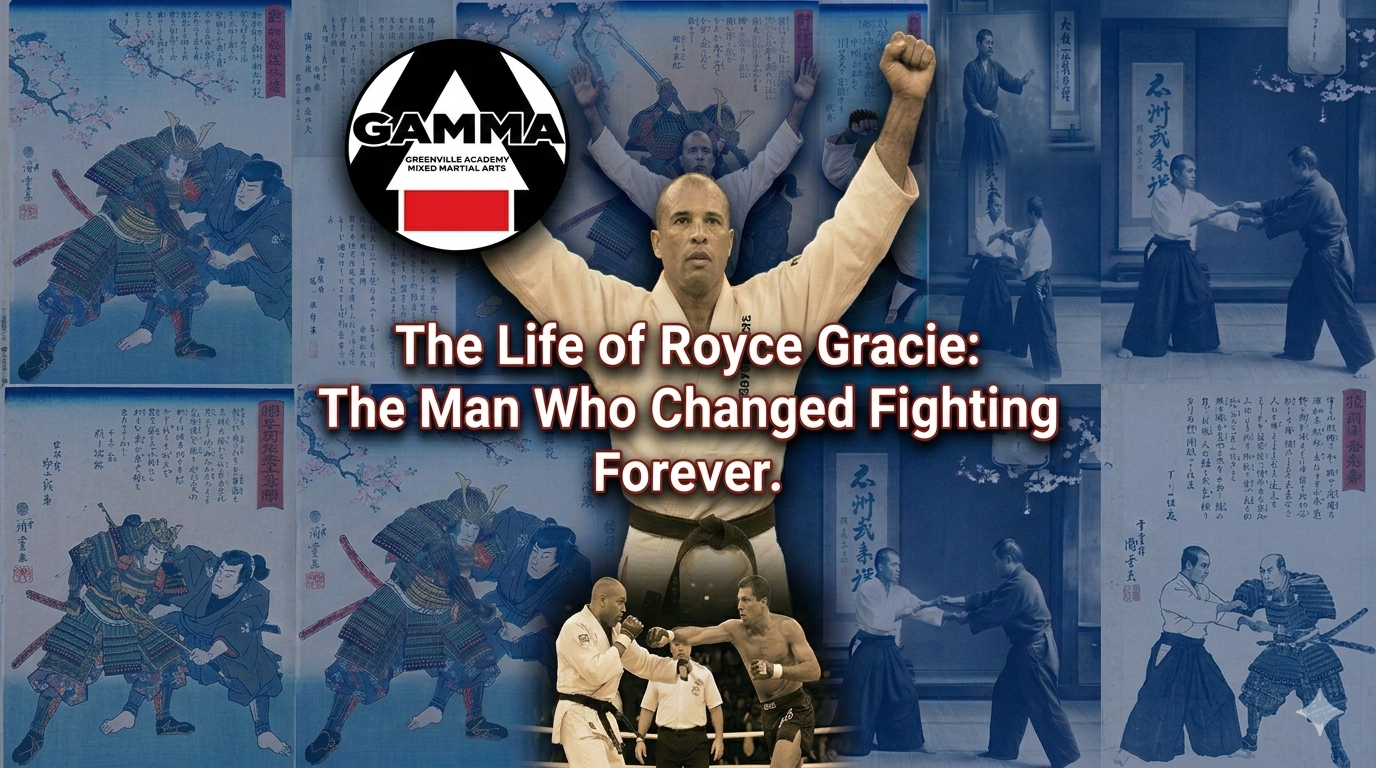
Royce Gracie was born on December 12, 1966, in Rio de Janeiro, Brazil, into the legendary Gracie family — the creators of Gracie Jiu-Jitsu.
His father, Helio Gracie, developed a fighting system based on leverage, timing, and efficiency rather than brute strength. Royce grew up immersed in this philosophy.
- He trained almost daily from a young age
- He watched real challenge matches
- He learned self-defense before sport competition
- He saw Jiu-Jitsu as a survival skill
In the Gracie household, Jiu-Jitsu was not optional — it was a way of life.
Why Royce Was Chosen to Represent the Family
In the early 1990s, the Gracie family wanted to prove that their style was the most effective fighting system. When the Ultimate Fighting Championship was created in 1993, they chose Royce to represent them.
They did NOT choose the strongest fighter.
They chose Royce because:
- He looked average
- He was not physically intimidating
- He represented that anyone could learn Jiu-Jitsu
- He embodied Helio’s philosophy
Royce became the perfect demonstration that a smaller person could defeat a larger opponent using technique.
UFC 1: The Night Fighting Changed Forever
In November 1993, Royce entered the first UFC tournament.
There were almost no rules, and fighters from many styles competed:
- Boxers
- Karate fighters
- Wrestlers
- Kickboxers
- Street brawlers
Royce shocked the world by defeating much larger opponents using calm control and submissions. Many viewers had never seen grappling used this way.
It looked effortless. It looked unstoppable. It changed everything.
Dominating the Early UFC
Royce went on to win:
- UFC 1
- UFC 2
- UFC 4
He defeated massive opponents including Dan Severn and Ken Shamrock, proving that skill could overcome size.
His victories taught the world:
- Fights often end on the ground
- Size alone does not guarantee victory
- Submissions can end fights quickly
- Strategy beats aggression
The Global Explosion of Brazilian Jiu-Jitsu
After Royce’s success:
- Jiu-Jitsu academies spread worldwide
- Law enforcement adopted grappling training
- MMA evolved into a complete sport
- Fighters began cross-training
Before Royce, most martial artists focused only on striking. After Royce, everyone understood that ground fighting was essential.
Fighting Style and Philosophy
Royce’s style was calm, patient, and strategic. He relied on:
- Position before submission
- Energy conservation
- Technical control
- Psychological pressure
His approach reflected Helio Gracie’s belief:
“Jiu-Jitsu is not about winning fights — it is about surviving them.”
Later Career and Legacy
Royce continued competing for many years, including historic matches in Japan and long battles against top fighters.
In 2003, he was inducted into the UFC Hall of Fame.
Today, he travels the world teaching and preserving the original self-defense philosophy of Gracie Jiu-Jitsu.
Royce Gracie’s Lasting Impact
Royce did not just win fights — he changed global martial arts forever.
- He launched the modern MMA era
- He popularized Brazilian Jiu-Jitsu worldwide
- He influenced military and police training
- He proved technique beats strength
- He inspired millions to train
The True Meaning of His Legacy
Royce Gracie’s story is not just about fighting.
It is about discipline, humility, intelligence, and confidence through knowledge.
He showed the world that the greatest weapon is not power — it is understanding.