
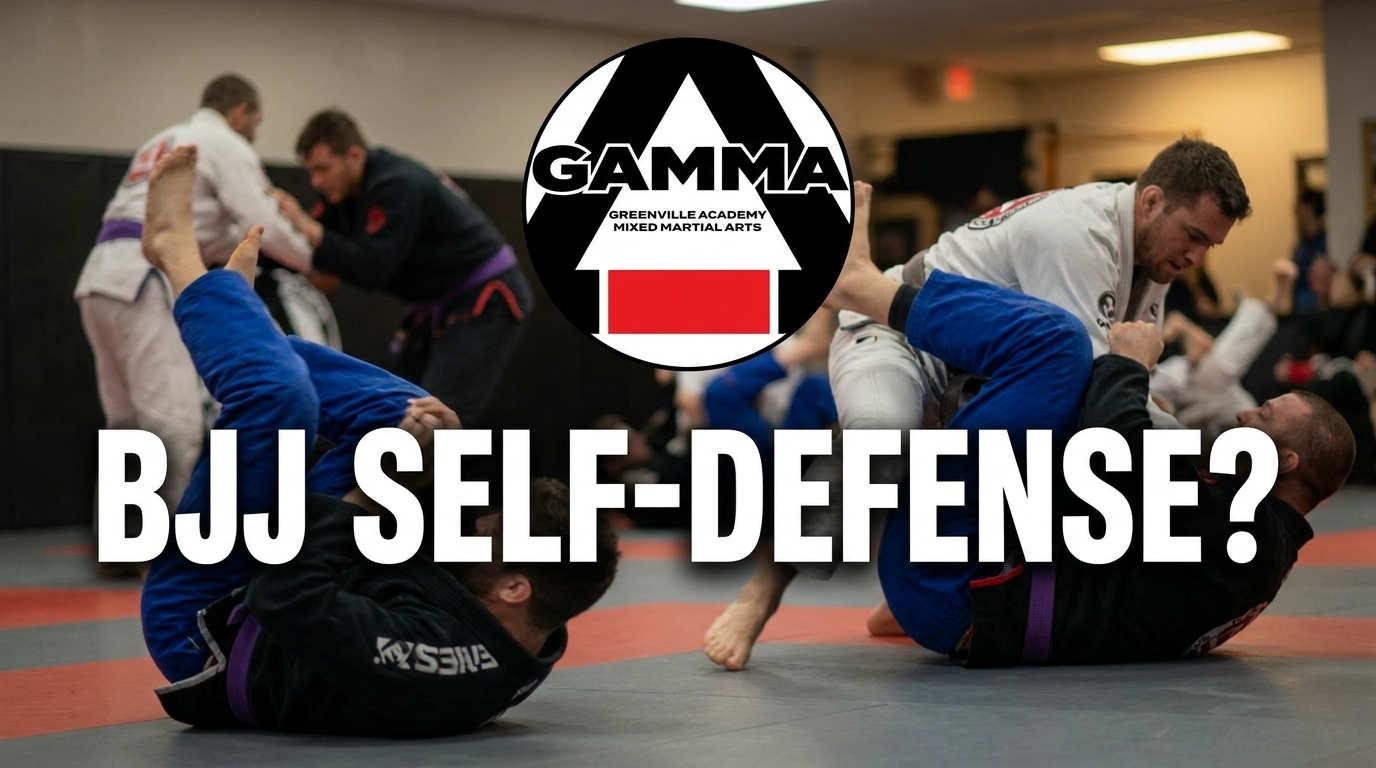
(At Least Not the Way It’s Commonly Taught Today)
Brazilian Jiu-Jitsu (BJJ) has earned a global reputation as one of the most effective martial arts for real-world self-defense.
That reputation is not without merit. In controlled environments, especially one-on-one unarmed encounters, BJJ has repeatedly proven its value.
However, there is a growing gap between what BJJ was designed to be and what many academies are actually training today.
This article is not an attack on BJJ itself. It is a critique of its current direction in many schools and the assumption that “training BJJ”
automatically means “being prepared for self-defense.”
The Original Idea: Self-Defense First
Traditional Gracie Jiu-Jitsu and early BJJ in Brazil were heavily focused on real-world survival. The premise was simple:
- Most fights go to the ground
- A smaller or weaker person can survive using leverage
- Control and escape matter more than damage
- Self-defense includes strikes, weapons awareness, and multiple attackers
Early practitioners trained with these realities in mind. But over time, the art evolved—especially after becoming a global sport.
The Sportization Problem
Modern BJJ is, for the most part, a sport. Like any sport, it has rules and incentives that shape behavior.
Sport BJJ rewards:
- Guard pulling instead of takedowns
- Long periods of playing guard
- Point-based control positions
- Referee-based pauses and resets
Real self-defense requires:
- Awareness of strikes
- Multiple attackers
- Hard surfaces like concrete
- No rules or time limits
- Immediate escape
These systems are not aligned.
The “Ground Is Safe” Myth
One of the most dangerous ideas is that going to the ground means control. In reality:
- A second attacker can enter the fight
- The surface may be dangerous
- Weapons can appear quickly
- Situations are unpredictable
Lack of Striking Integration
Many BJJ schools lack consistent striking integration. Without pressure testing against strikes, habits can form that do not translate to real violence.
Over-Reliance on Positional Play
Sport BJJ emphasizes winning positions and points. Self-defense emphasizes escape, not control.
Conclusion
Brazilian Jiu-Jitsu is not inherently ineffective for self-defense. However, modern training often drifts away from real-world application.
BJJ works best for self-defense when it is treated as a survival system—not just a sport.